
An unprecedented amount of snowmelt presaged severe flooding across the upper Midwest. Thankfully, the AWARE Flood System was quickly deployed in Eastern Iowa to track water levels and alert residents to a possible record-setting flood event.
The adage “April showers bring May flowers” traditionally offers the hope of beauty and happiness following a dreadful, rain-soaked season. But for the National Weather Service (NWS), this past April portended something serious for the upper Midwest.
Historic snowfall in Minnesota followed by higher-than-average temperatures and rainfall resulted in an unprecedented amount of melted snow draining into the Mississippi River basin. The rapid influx of water threatened low-lying communities along the river, particularly in Minnesota, Wisconsin, and Iowa.
 The NWS forecasted up to 13 river gauges reaching a major flood stage over the final week of April (see right). A “major flood stage” indicates water cresting over a predetermined height and likely posing a serious risk to people and property in the area. In anticipation of this possible flooding event, communities and businesses straddling the Mississippi River needed water level data on creeks and tributaries to get alerts on when water was near cresting and when to evacuate residents or personnel.
For a cost-effective, quickly deployable, and accurate flood-monitoring solution, they turned to Intellisense and its AWARE Flood System.
The AWARE Flood System consists of a wireless and highly rugged communications unit that can integrate multiple sensors and automatically send flood alerts when certain thresholds are reached. It can connect with pressure transducers, cameras, tipping bucket rain gauges, and water level radar to accommodate any location in need of water level observations. The system also includes a web-based dashboard with cloud-based data-logging so that users could easily retrieve, view, and archive data from anywhere in the world.
Just one week before this expected flooding event, Intellisense shipped a communication unit, auxiliary power module, water-level radar, and a camera sensor to Muscatine, Iowa, a city of 23,000 residents and home to two major production facilities. The NWS forecasted crests as high as 23.5 feet over a flood stage of just 16 feet. The radar provided the most accurate means of recording water-level data without contacting the water, and the auxiliary power module ensured that the wireless system could continuously record data in times of low solar exposure. The camera sensor also sent pictures of area at five-minute intervals.
The system was installed over a creek with a normal depth of just two feet. In the final week of April, the creek rose nearly 14 feet, prompting the AWARE Flood System to automatically send alerts and images from the site. Fortunately, the waters did not crest over the 16-foot flood stage. They finally receded in the first week of May.
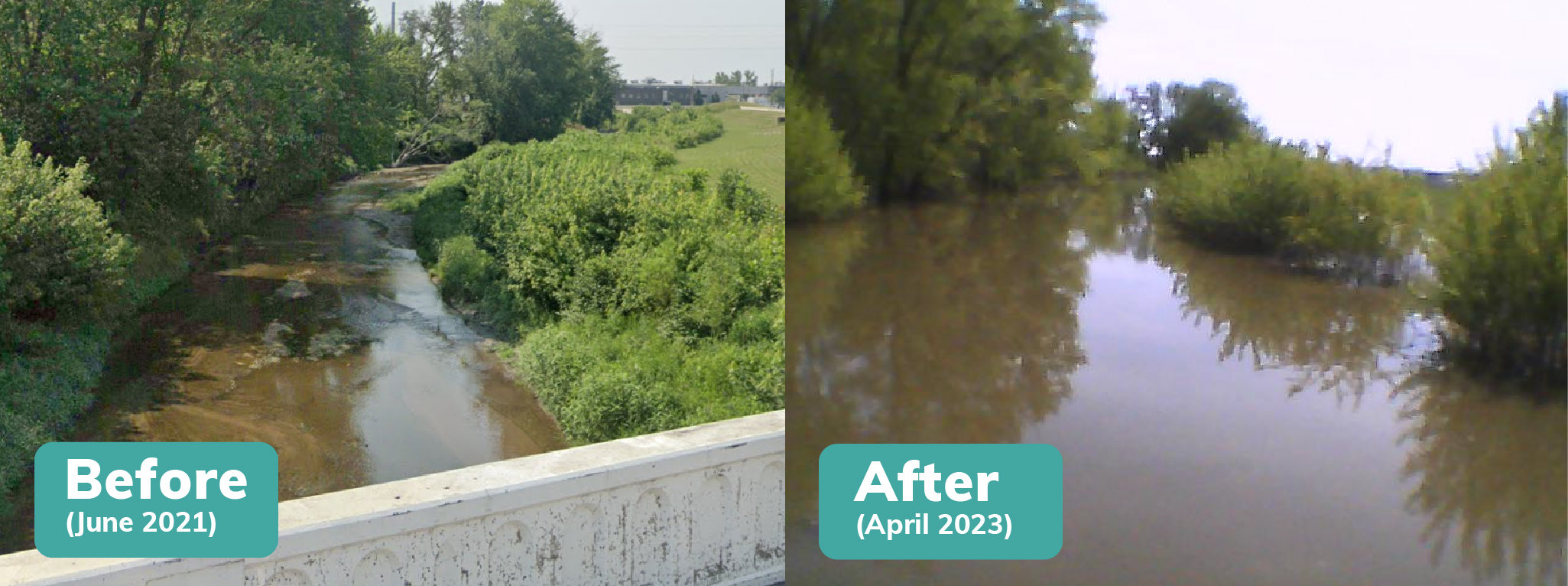
The NWS did see several gauges reach the major flood stage in the cities of McGregor, Iowa, Winona, Minnesota, and La Crosse, Wisconsin. This flooding event is now ranked among the top five historic crests according to NWS records, following only two record-breaking inundation events in 1965 and 2001.
The AWARE Flood System has already been proven successful during similarly unprecedented weather events like Hurricane Ida, the second strongest storm to strike the state of Louisiana after Hurricane Katrina. The system recorded over six feet of water inundating the shores of Lake Pontchartrain and continued reporting data even high winds dislodged the pole on which communications unit was mounted. The use of over 90 AWARE Flood units across Mecklenburg County, North Carolina also helped officials map floodplains to determine which structures needed to be raised and where to leave land undeveloped. When the remnants of Hurricane Eta dumped a historic amount of rainfall on the area in November 2020, these inundation maps prevented an estimated $10 million in damages.
A broader deployment of AWARE Flood Systems along the Mississippi River could produce more data on the basin’s seasonal flooding and help state, city, and local leaders prevent future losses due to flooding.