The experts at Intellisense have written a handy article to clarify the concepts of microweather and microclimate and explain why they are important to people, cities, and industries.

Faced with the many challenges of climate change, which include unpredictable weather, rising temperatures, and increased risks of flooding, the term “microclimate” has garnered more curiosity for people wondering how a rapidly changing environment will affect their neighborhood. Microclimate is sometimes used interchangeably with the term “microweather,” but like the general definitions of “weather” and “climate,” they are two distinct concepts.
A microclimate is defined as an area in which atmospheric conditions generally differ from the surrounding landscape. Some examples of microclimates can be found Los Angeles County, where Intellisense Systems calls home. Temperatures, winds, precipitation, and cloud cover can vary greatly across the U.S.’s most populous county. One microclimate can be found in the San Fernando Valley, which averages nearly 300 sunny days per year and temperatures that are ten degrees hotter than the surrounding area. But just 20 miles southwest is another microclimate; the “Westside.” This urban district along the coast frequently sees cloudy skies in the summer and average temperatures ten degrees cooler than the rest of the county.
Conversely, microweather describes immediate hyperlocal atmospheric observations within the nearest kilometer (0.62 miles). Most forecasts assess the environment on a synoptic scale (over 1,000 kilometers), but microscale observations capture weather conditions at the highest possible resolution, typically within a city block. So while a microclimate can have a statistically higher than average temperature compared to the local area, microweather reports the exact temperature at a particular moment within the nearest half-mile.
Using the previous example, the San Fernando Valley features a microclimate with higher temperatures compared to the surrounding area. But microweather observations in the San Fernando Valley could show the exact temperature at a street level within the nearest kilometer.
Additionally, microclimates are usually perceived as a natural phenomenon, conjuring images of unexpected weather or fauna in certain areas (like a desert oasis or palm trees in a non-tropical climate). But microclimates can be man-made as well. Cities with large swaths of asphalt and concrete absorb heat from the sun and radiate it upwards, resulting in an urban heat island. The removal of forests and vegetation can also eliminate a means of capturing dust and other atmospheric obscurants, which in turn reduces visibility and negatively affects air quality. Though microclimates broadly define the atmospheric conditions in a certain area, instant microweather observations can keep vulnerable populations safe in uncertain weather.
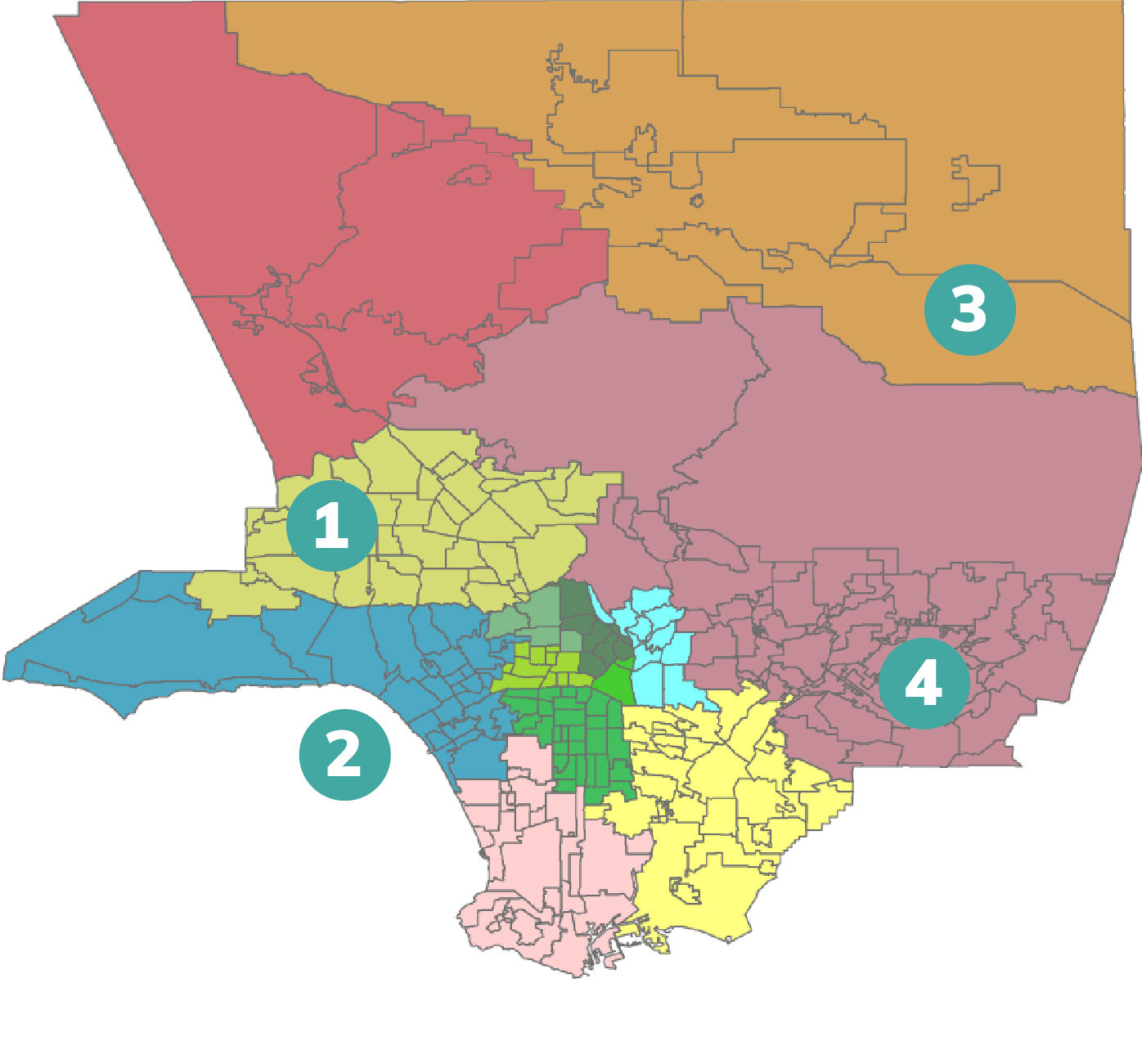 Let’s explore four of Los Angeles’ nearby microclimates and their relationship to weather, infrastructure, and residents:
- San Fernando Valley – This area is notoriously hotter in the summer because the Santa Monica mountains block cooler air masses coming in from the Pacific Ocean. The Valley’s infrastructure features acres of asphalt and concrete, as well as structures comprised of brick and glass. This infrastructure absorbs heat and radiates it upward, creating a heat island. With temperatures rising due to climate change, residents may become more susceptible to heat stroke and dehydration.
- The Westside – Although Los Angeles is known for many days of sun, the city’s westside usually experiences overcast skies in the mornings during the late spring and early summer. With the urban heat island effect, the air temperature increases with the altitude, resulting in a temperature inversion. The air below the inversion is cooled to the point that clouds form. These overcast skies often are accompanied by fog and drizzle.
- Antelope Valley – This arid region north of Los Angeles sits on the westernmost edge of the Mojave Desert. Thanks to the surrounding San Gabriel Mountains and the Sierra Pelona Ridge, the area typically sees seasonal katabatic winds in the autumn, making it an ideal location for capturing renewable wind energy. And despite the desert climate, the Antelope Valley does experience inches snowfall every few years.
- San Gabriel Valley – Located east of downtown Los Angeles, the San Gabriel Valley can see temperatures upwards of 20 degrees higher than the coastline. Because of the surrounding mountains, temperature inversions often lead to high concentrations of pollutants in the area and adversely affect air quality.
With temperatures and wind growing more erratic and intense as a result of climate change, city officials and business leaders need hyperlocal weather observations to stay alert to any severe weather events. Unfortunately, there are only 11 permanently installed weather stations across Los Angeles, which is home to nearly 10 million residents. Much of the world lacks immediate, ground-based weather observations that could protect people from extreme weather events and ensure the successful completion of vital operations. Establishing more remote weather-sensing tools, which provide accurate data in addition to being less expensive and time-intensive to install than permanent weather stations, can alert residents to instances of extreme heat or poor air quality within a nearest kilometer.
Intellisense Systems offers the ideal solution for capturing microweather data in the Micro Weather Station (MWS®). This all-in-one, completely wireless weather station collects and autonomously reports more than 20 weather parameters over a cellular or satellite connection, and it is ruggedized to withstand long-term deployments and extreme weather events. It stores this data on a cloud-based data logger so that it can be quickly accessed from anywhere in the world. This information will be invaluable as climate change results in more volatile weather that affect billions worldwide. Armed with this microweather data, cities and businesses can complete their services with confidence and keep their citizens and personnel safe.