3 Flood-Monitoring Needs for Hurricane Seasons and Tropical Cyclones
Flooding and storm surges from hurricanes impose some of the greatest challenges for local infrastructure. The latest white paper from Intellisense looks at the threats that communities and businesses face during these severe weather events.
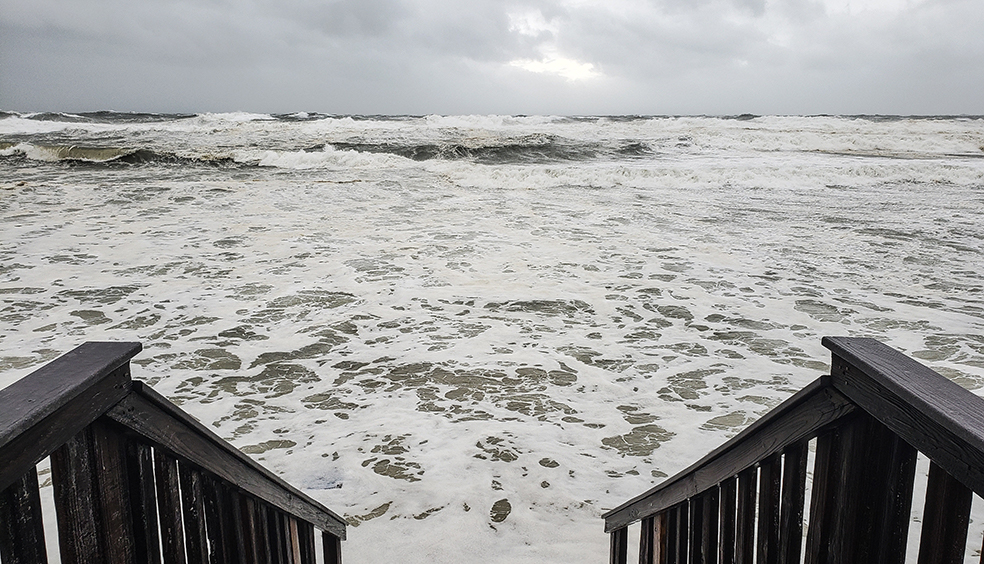
Last summer, Hurricane Ida became one of the deadliest and most destructive hurricanes in United States history. It struck the U.S. Gulf Coast on August 29, 2021, becoming the second-most powerful hurricane to make landfall in the state of Louisiana after Hurricane Katrina. It generated storm surge that overtopped several levees and knocked out power for nearly 1 million residents. It then moved north and dumped record amounts of rainfall across the Northeastern United States, resulting in flooding that cost 27 lives. In all, Hurricane Ida became the sixth costliest tropical cyclone in history, having caused at least $50.1 billion in damages.
Tropical cyclones – otherwise known as hurricanes, typhoons, tropical storms, or depressions depending on their intensity and location – develop under five atmospheric conditions:
Sea surface temperatures greater than 27° C (80° F)
Preexisting low-level cyclonic circulation
Weak vertical wind shear
Divergence aloft (rising air through the troposphere)
Coriolis effect (apparent force that that deflects objects rightward in the northern atmosphere, present at 5° north or south of the equator)
These conditions recur annually in the Northern Atlantic Ocean, the Northeast and Central Pacific Ocean, and the Gulf of Mexico, resulting in the Atlantic and Pacific hurricane seasons. These seasons typically last from early June to late November every year and affect millions of people near the U.S. eastern seaboard, the U.S. Gulf Coast, the Caribbean Islands, the Hawaiian Islands, and the eastern and western coasts of Central America. These storms often bring intense rainfall, high winds, and storm surges that usually result in severe flooding events.
Due to warmer temperatures because of climate change, these hurricane seasons are yielding more storms with greater intensity, threatening the livelihoods of millions in North and Central America. The National Oceanic and Atmospheric Administration (NOAA) recently raised the average number of storms from 12 to 14 to reflect the increasing number of tropical cyclones. 2020 became the most active Atlantic hurricane season on record, with 7 major hurricanes costing over 400 deaths. To address the increasing intensity of these storms, communities in North and Central America need to take a proactive approach to responding to adverse weather and ensuing flooding events.
The latest white paper from Intellisense details how communities and businesses can prepare for hurricane seasons or tropical cyclone events with a low-cost, rugged flood-monitoring system. It explores three requirements for flood-monitoring systems during an intense storm event, as well as real-life examples of how one solution improved community and business responses to record-setting weather events over the last three years.
One of the events profiled includes a community’s safe and resilient response to Hurricane Ida thanks to this flood-sensing solution.
Download the full white paper by completing the form on the right.
 Last summer, Hurricane Ida became one of the deadliest and most destructive hurricanes in United States history. It struck the U.S. Gulf Coast on August 29, 2021, becoming the second-most powerful hurricane to make landfall in the state of Louisiana after Hurricane Katrina. It generated storm surge that overtopped several levees and knocked out power for nearly 1 million residents. It then moved north and dumped record amounts of rainfall across the Northeastern United States, resulting in flooding that cost 27 lives. In all, Hurricane Ida became the sixth costliest tropical cyclone in history, having caused at least $50.1 billion in damages.
Tropical cyclones – otherwise known as hurricanes, typhoons, tropical storms, or depressions depending on their intensity and location – develop under five atmospheric conditions:
Last summer, Hurricane Ida became one of the deadliest and most destructive hurricanes in United States history. It struck the U.S. Gulf Coast on August 29, 2021, becoming the second-most powerful hurricane to make landfall in the state of Louisiana after Hurricane Katrina. It generated storm surge that overtopped several levees and knocked out power for nearly 1 million residents. It then moved north and dumped record amounts of rainfall across the Northeastern United States, resulting in flooding that cost 27 lives. In all, Hurricane Ida became the sixth costliest tropical cyclone in history, having caused at least $50.1 billion in damages.
Tropical cyclones – otherwise known as hurricanes, typhoons, tropical storms, or depressions depending on their intensity and location – develop under five atmospheric conditions:
